Why we look before we give you a number
The estimate everybody wants over the phone is the one most likely to change later.
September 7, 2026 · 3 min read
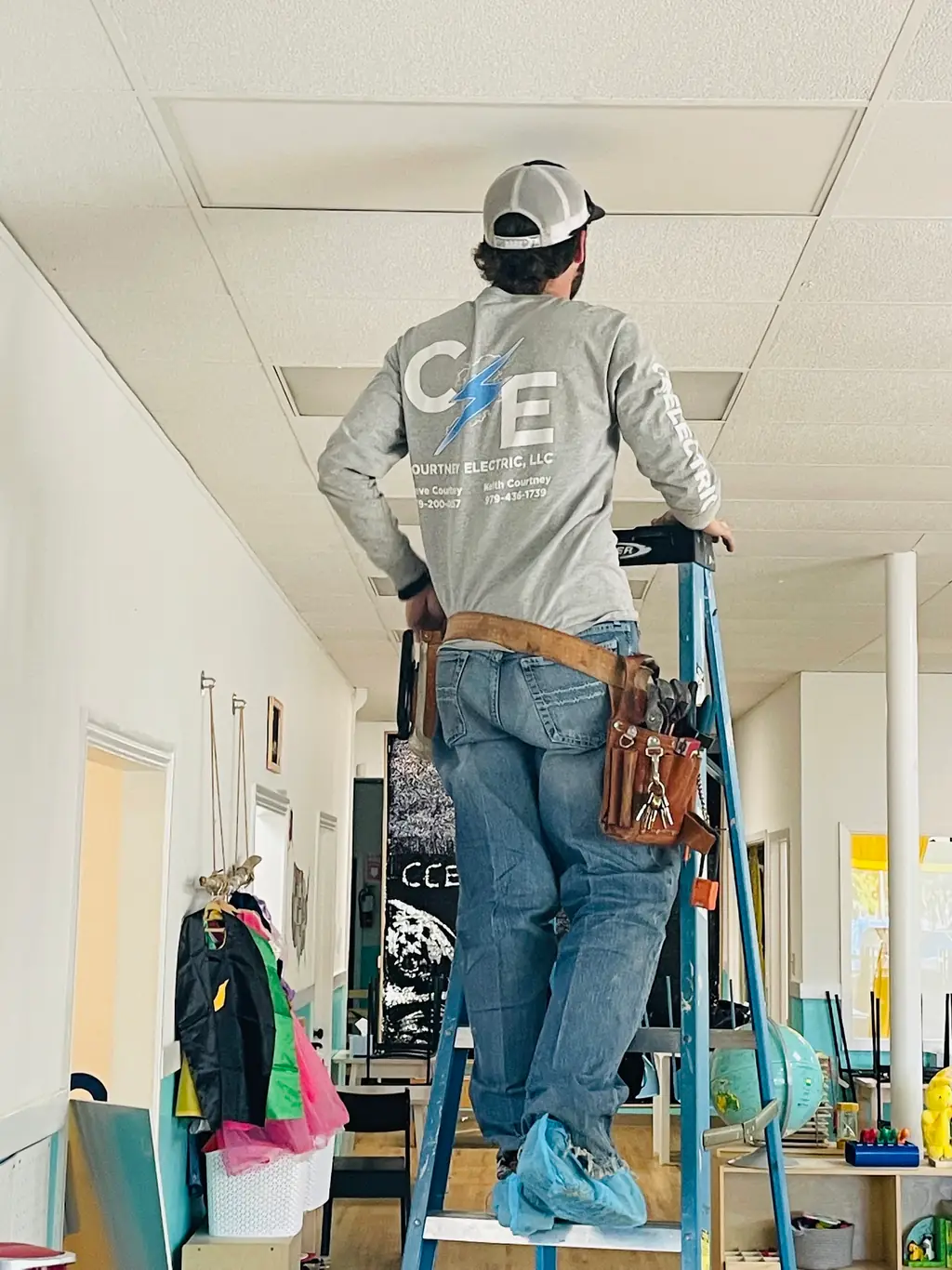
The most common request an electrical office gets is a price over the phone. It is a completely reasonable thing to ask for. You want to know roughly what you are dealing with before you commit an afternoon to it.
The problem is that the phone estimate is the least reliable number in the trade, and the gap between it and the real one almost always lands on the customer rather than the contractor.
What a description leaves out
When you describe a problem, you are describing the symptom accurately. What you cannot describe is what is behind the wall, because nobody can. A dead circuit in a bedroom might be a failed device, a damaged cable, a connection that has worked loose in a junction box in the attic, or a modification somebody made in 1994 that has finally given up.
Those four causes have very different amounts of work attached to them. A price given before anyone knows which one it is has to either assume the cheapest, which means it will change, or assume the worst, which means you are being quoted for a problem you may not have.
Older properties make this sharper
Around here, most houses of any age carry decades of modifications by different hands to different standards. Sorting that out carefully is genuinely most of the job on a lot of calls.
It is not unusual to open a panel and find circuits that do not match the labelling, cable types from three different eras, or an addition fed off something that was never intended to feed it. None of that shows up in a phone call, and all of it changes the work.
What the visit is actually for
Diagnosing is not the free preamble to the real job. It is the part that decides what the real job is.
On a service call that usually means tracing the fault to its actual cause rather than to the first thing that plausibly explains it. On a larger project it means establishing what the existing service can carry, what condition the existing work is in, and what has to happen in what order.
The output is a scope. Once there is a scope, a price is a straightforward thing to produce and a stable thing to rely on.
Swapping parts is not diagnosis
There is a way of working that looks like progress and is not: replace the most likely component, see if the symptom goes away, move to the next one if it does not. It occasionally works, and it is why some faults come back six weeks later having been fixed twice already.
The difference matters most on intermittent problems. A fault that appears only under certain load, or only in wet weather, will happily disappear on its own for a fortnight and take a parts-swap approach with it.
The uncomfortable version, early
The real commitment in diagnosing first is not the looking, it is what you do with what you find. If a job opens up into something larger once a cover comes off, the useful moment to say so is immediately, while you still have every option, including stopping.
A revised invoice at the end is the same information delivered at the worst possible time, when the work is done and the decision has been made for you.
What this means for how you should brief anyone
A few things genuinely help, whoever you call.
- When the problem started, and whether anything changed around the same time
- Whether it is constant or intermittent, and what seems to trigger it
- Roughly how old the property is and whether it has been extended
- Whether anyone has worked on the electrics recently, and what they did
- For a commercial job, drawings and a scope, which is why bid documents go straight to the estimating side
None of that replaces looking. It does mean the person arriving has a head start on where to look first, which is worth real time on the day.
And when it is genuinely simple
Plenty of jobs are exactly what they appear to be, and you should expect to be told that too. The point of diagnosing first is not to make everything sound complicated. It is to make sure that when something is complicated, you find out from the electrician rather than from the bill.
Estimates from CC Electric are free and often same day, across Caldwell, Bryan, College Station and the rest of the Brazos Valley.
CC Electric, LLC — (979) 406-5483
Call (979) 406-5483More articles
The signs your electrical panel has run out of road
Most panels do not fail dramatically. They just quietly stop being big enough for the house they are in.
Before you buy an EV charger, somebody needs to look at your panel
The hardware is the easy part. The service feeding it is the part that decides the job.